
Garden design: top tips for home composting
Few things are more beneficial for our gardens than a good supply of lovely home-produced compost, but did you know that it can also be good for the planet? This is partly because successful home composting reduces the amount that goes to landfill, but also because it also provides a really healthy soil improver which can actively support biodiversity in our gardens.
Home composting is really simple, and it needn’t take too much time or space. Here are our top tips for brilliant home composting:
1. Bin or heap? We can, of course, opt for a purpose-made compost bin which tend to be made from plastic, and typically have a removable lid at the top and a door at the base to make it easier to remove the compost. They are reasonably compact and so are suited to even the smallest of gardens.
Alternatively, we could create a more ‘basic’ compost heap which, at its most basic level, could literally be a corner of the garden where waste material is piled up. A simple cover (e.g. a plastic sheet or an old carpet) can help to retain moisture and heat. Old pallets can create effective sides for a compost heap if we want it to tidier and more contained.
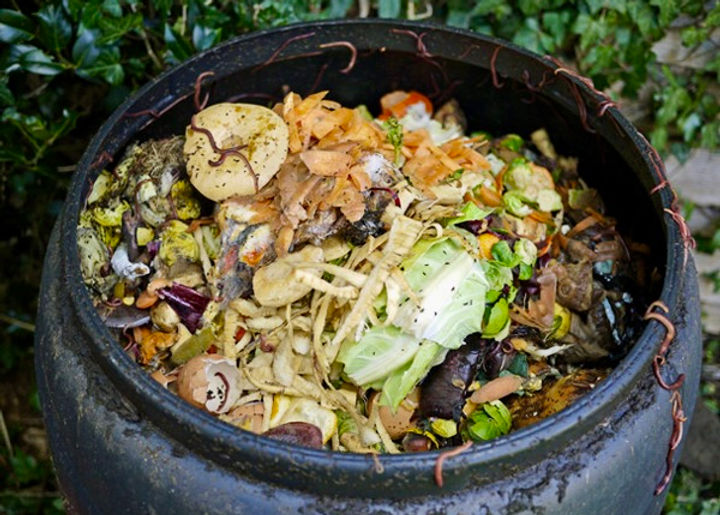
2. What can we compost? Lots of waste material from our gardens and kitchens can be added to home compost. This includes grass cuttings (although it’s best not to overdo these) and dead leaves, coffee grounds, teabags (some teabags contain plastic, so some people prefer not to add these to their composting systems), eggshells, and fruit and vegetable peelings. Cardboard and newspaper can also be added, as can bedding and droppings from small pets like rabbits, hamsters and guinea pigs.
3. Best avoided: There are, however, some things we don’t want in our compost, including dog and cat waste, cooked food, meat, fish or dairy, and any bread products. All of these can attract vermin and won’t be beneficial for the composting process.
4. Everything in moderation: For a really healthy composting system it is a good idea to add little amounts of a variety of different things. Too many grass cuttings, for example, will create an imbalance and can be smelly as they decompose.
5. When is our compost ready to use? Our compost is ready when it has a crumbly texture and is dark in colour. Healthy compost is largely odour-free and can either be dug into the soil or added as a top-dressing. We can quicken up the composting process by regularly turning the decomposing material with a garden fork.
Tythorne Garden Design provides professional fixed-fee garden design solutions for customers in Grantham, Stamford, Newark and surrounding areas. Let's see how we can help you to enjoy your garden more. Call us on 07900 224 239 or 01529 455 355.
Image credit: https://www.allotmentbook.co.uk/how-to-make-homemade-compost/