
Garden design: trees for smaller gardens
Most of us know that trees are wonderfully beneficial for wildlife, providing shelter, food and habitat for a wide range of species. But there is increasing awareness of just how important trees can be for our own health and happiness. The Woodland Trust, for example, says “trees boost our physical and mental health…offering relief from the symptoms of anxiety and depression”.
Just as significantly, if every garden in the UK had at least one tree they could collectively absorb more than 500,000 tonnes of carbon each year*. That’s on top of our existing forests and woodlands which are thought to be responsible for capturing more than 18 million tonnes per year. Makes you think doesn’t it?
Not every garden, of course, is large enough to support some of our bigger trees, but there really is a tree for almost any size and shape of garden. Here are five of our favourite trees for smaller gardens:
1. Sorbus ‘Joseph’s Rock’ (mountain ash): an attractive upright tree with a narrow leaf canopy making it ideal for smaller spaces. Its finely-cut leaves provide beautiful autumn colour, and clusters of soft yellow berries appear from late summer and early autumn.
2. Malus ‘John Downie’ (crab apple): a really useful small tree with pretty spring white blossom and large bright red/orange fruit in late summer and early autumn. The crabs (fruit) can be made into jellies or cordials and are ideal for adding to homemade jams because they are particularly rich in pectin.
3. Amelanchier lamarckii (juneberry): regularly seen at the RHS Chelsea Flower Show because of its impressive late spring flowers, Amelanchier is a fine-looking tree with much to offer. The pretty flowers are shortly followed by dark berries (hence the common name), and additional interest is provided when the leaves turn orange and red as autumn sets in.
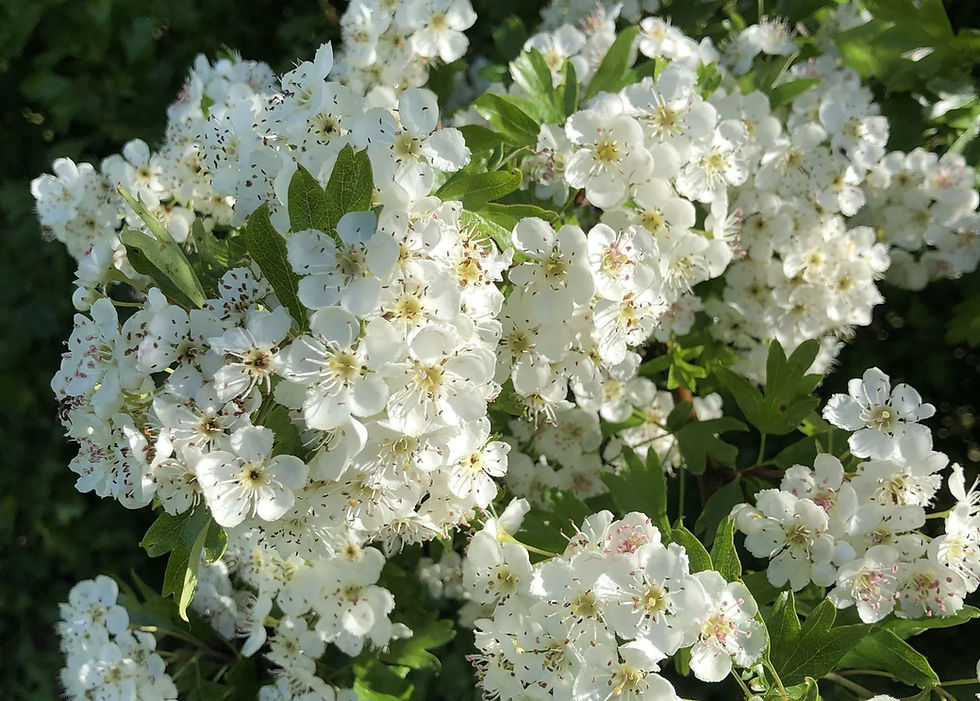
4. Crataegus monogyna (common hawthorn) (pictured): a staple plant of almost every mixed hedgerow up and down the UK, but also a really attractive garden tree. Abundant fragrant white flowers appear in late spring, followed by masses of dark red (edible) berries. It is covered in thorns, so provides a safe haven for small birds.
5. Acer griseum (paperbark maple): one of the slower-growing and more compact maples, Acer griseum boasts incredible cinnamon coloured peeling bark. Simply magical when it catches the sunlight, this is a glorious tree to have as a focal point or ‘eye-catcher’ in a smaller garden. Good autumn colour too.
Tythorne Garden Design provides professional fixed-fee garden design solutions for customers in Grantham, Stamford, Newark and surrounding areas. Let's see how we can help you to enjoy your garden more. Call us on 07900 224 239 or 01529 455 355.
*Based on the understanding that there are approx. 23 million gardens in the UK and the average tree being capable of absorbing approx. 22kg of carbon per year. This does vary according to species and size.
Image credit: www.habitataid.co.uk